| Risk note: Educational content only. This article is not financial advice, investment advice, or a recommendation to buy or sell any instrument. Trading leveraged products can result in losses greater than expected, and each reader should understand the risks before trading. |
|---|
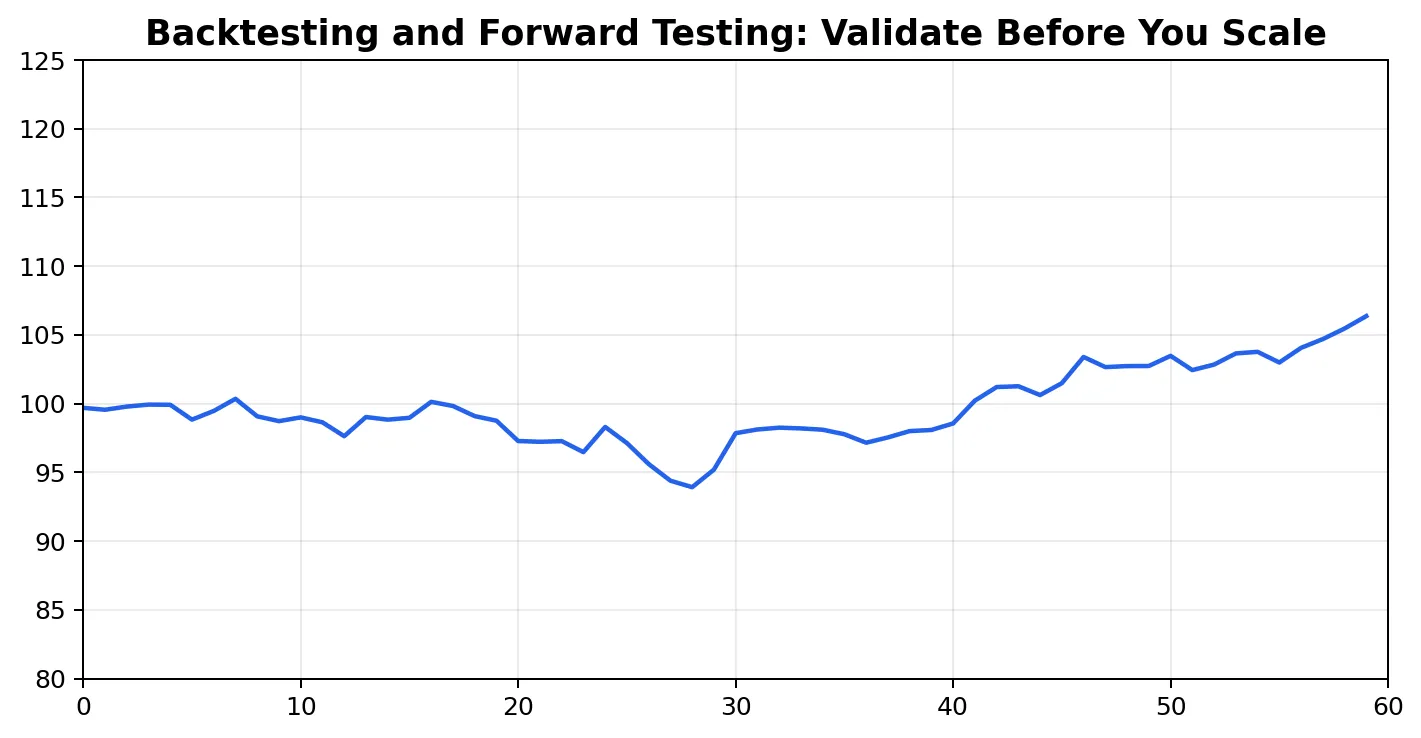
Figure 1. Backtesting and Forward Testing: Validate Before You Scale - visual summary.
Introduction
Testing converts an idea into evidence. Backtesting shows how rules performed historically, while forward testing shows whether the trader can execute them in real time.
This article is written for advanced learners who want practical, risk-aware trading education rather than hype. The objective is not to predict the next market move; it is to build a repeatable decision process that can be documented, tested, and improved.
Good trading education should make a trader more cautious, not more reckless. Every concept below should be practiced first on historical charts or a demo account before live capital is involved.
Key idea
The central principle is simple: define rules before testing; include costs and slippage; separate in-sample and out-of-sample data when possible; track drawdown as seriously as profit; and start small after testing because live execution changes behavior.
A trader should treat these ideas as operating rules. Rules do not remove uncertainty, but they reduce the number of decisions made under stress. The professional mindset is to prepare scenarios in advance and then execute only when conditions match the plan.
The market does not reward confidence by itself. It rewards disciplined execution when the trader has a valid edge, realistic costs, and a plan for being wrong.
Step-by-step application
Start by defining the market and timeframe. A trader who watches every instrument usually reacts late and inconsistently. Choose one primary market, one higher timeframe for context, and one execution timeframe for entries.
Second, write the conditions that must exist before a trade is considered. These conditions can include trend, level, volatility, news risk, time of day, and acceptable spread. If the conditions are not present, the correct trade is no trade.
Third, define the entry, stop loss, target, and position size before placing the order. The position size should be calculated from the maximum acceptable loss, not from excitement about the potential profit.
Finally, record the result and execution quality. A profitable trade taken outside the plan is still a process problem, while a losing trade taken correctly can be useful evidence.
Practical example
Imagine a trader preparing for the London session. The trader marks the previous day’s high and low, identifies the higher-timeframe trend, checks the economic calendar, and waits for price to reach a planned area. Instead of chasing the first fast move, the trader waits for a clear trigger and calculates risk from the stop distance.
If the setup offers a reasonable relationship between potential reward and risk, the trader executes with predefined size. If the spread widens, the news schedule is too close, or the stop would be too large, the trade is skipped. Skipping weak opportunities is a core professional skill.
Common mistakes
The most common errors in this topic are curve-fitting rules to old data; ignoring losing streaks; and assuming backtest results guarantee future performance.
These mistakes usually appear when the trader focuses on outcome instead of process. The antidote is a written checklist, small size, and honest review. A trader should be able to explain why a trade was taken without using words such as hope, feel, or maybe.
Another frequent problem is changing the rule after seeing the outcome. This creates a moving target and makes improvement impossible. Rules can be improved, but only after reviewing a meaningful sample of trades.
Checklist before using this concept live
Can you explain the concept in one paragraph without jargon? Have you tested it on at least 30 historical examples? Do you know where the idea is invalidated? Have you included spread, commission, swap, and slippage in your thinking? Can you lose the next five trades without emotional damage or account damage?
If any answer is no, continue practicing. The goal is to become consistent before becoming aggressive. In trading, survival is the first edge.
Practice exercise
Open a demo chart and collect ten examples related to backtesting and forward testing: validate before you scale. For each example, take a screenshot, mark the context, write the reason a trade would or would not be allowed, and record what happened next. Do not optimize the rules yet; first learn to observe objectively.
At the end of the exercise, write one paragraph about what made the clean examples different from the poor examples. This note becomes the first draft of your personal trading rulebook.
Quick reference table
| Decision area | Good practice | Danger signal |
|---|---|---|
| Preparation | Check trend, level, spread, session, and news. | Entering because price is moving fast. |
| Risk | Define stop and size before entry. | Increasing size to recover a loss. |
| Review | Track execution quality and outcome separately. | Remembering only wins and dramatic losses. |
Suggested internal links for your website
- Risk management guide
- Trading plan template
- Trading journal worksheet
- Broker safety checklist
Sources and compliance references
- SEC Investor Publications, Day Trading: Your Dollars at Risk.
- Investor.gov, Margin Rules for Day Trading.
- CFTC Learn & Protect, Foreign Currency Trading.
- ESMA product intervention materials on CFDs and binary options.
- FINRA investor education and margin/risk materials.
Editorial note: Review local regulatory requirements and product-specific risk warnings before publishing. Add broker-specific risk disclosures where legally required.