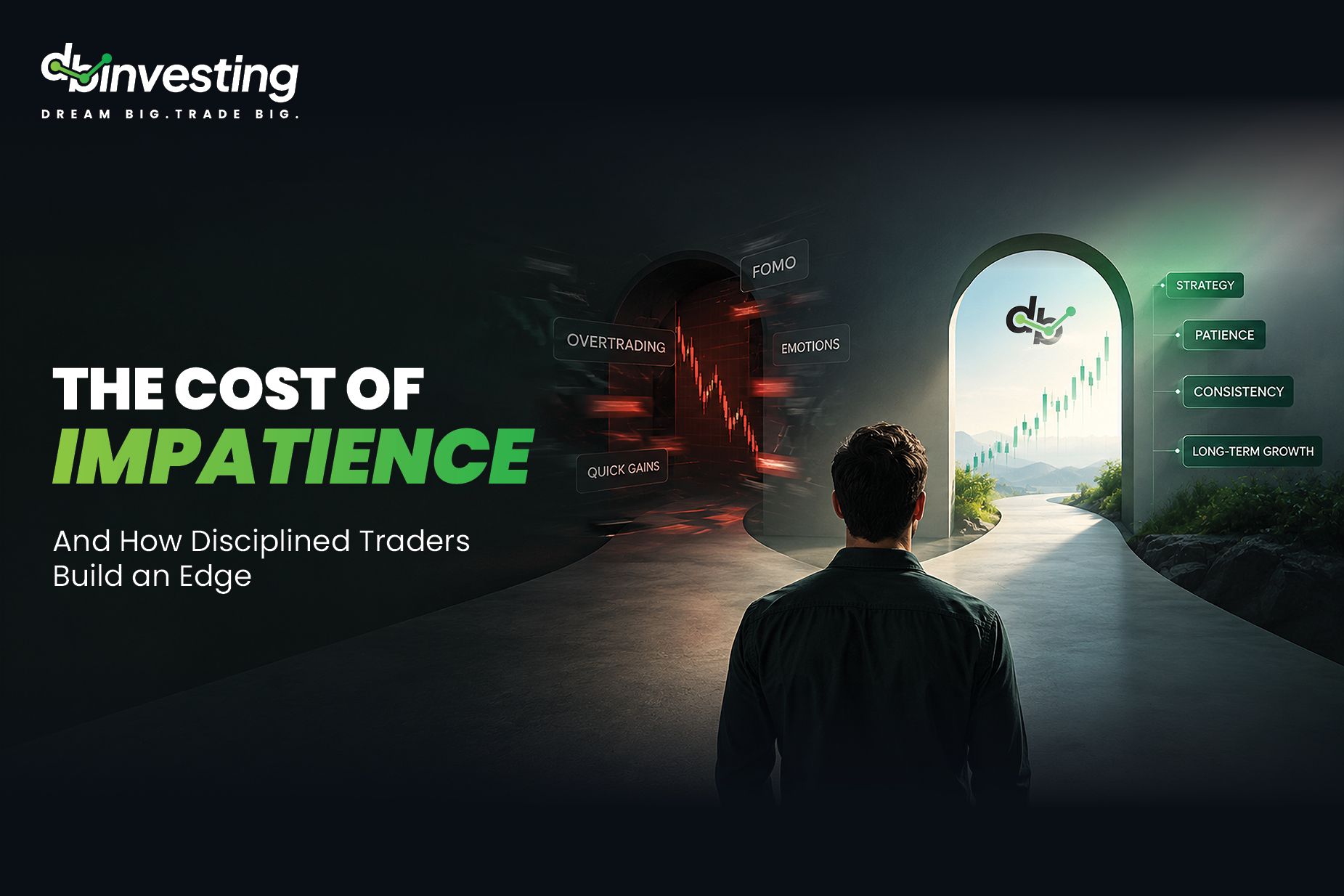
Markets move constantly. Discipline is knowing when to act.
The Psychology Behind the Urge to Trade
Impatience in financial markets is rarely random; it is driven by deeply rooted cognitive biases:
- FOMO (Fear of Missing Out)
- Action Bias
- Emotional Compounding
The research bears this out. In Crypto-Mania: How FOMO Drives Risky Investment Decisions, published in Psychology & Marketing, Friederich et al. found that FOMO cues heighten risk-taking and emotional impulsivity, prompting repeated speculative decisions even after clear losses.
When Activity Gets Mistaken for Opportunity
Unchecked impatience typically unfolds in an expensive, predictable loop:
- FOMO Trigger: Observing rapid price expansion on the chart.
- Premature Entry: Executing an order before the confirmation candle closes.
- Chasing Momentum: Buying at cyclical highs or shorting near the lows.
- Overtrading: Stacking unnecessary positions to salvage suboptimal entries.
- Emotional Burnout: Exiting at maximum drawdown, with no plan to fall back on.
High turnover is not the same as high profitability. In Trading Is Hazardous to Your Wealth, Barber and Odean found that frequent traders significantly underperformed the market, a gap they attributed to overconfidence and excessive trading.
Build a Process: From Signal to Execution
Analytical tools like the DB Investing Signal Centre exist to streamline information, not replace human judgment. A quality signal is an alert, not a mandatory trade.
Run every inbound signal through a five-step verification sequence:
- Signal: Receive objective market data points and algorithmic patterns.
- Review: Cross-reference underlying technical indicators and major scheduled economic events.
- Confirm: Check whether market volatility and structure align with your core strategy.
- Assess Risk: Determine stop-loss levels, profit targets, and specific position sizing.
- Decide: Execute deliberately—or walk away without regret.
Rule to remember: Signal received ≠ Trade required.
How to Systematize Trading Discipline
Engineer discipline directly into your operational rules instead of relying on raw willpower:
- Entry Triggers: Require multiple confirming indicators before entry.
- Capital Protection: Cap single-trade exposure to a strict percentage of account equity.
- Economic Buffers: Freeze new trades 15 minutes before and after high-impact data releases.
- Performance Journaling: Document trade setups alongside your emotional state at execution.
- Defined "No-Trade" Conditions: Establish explicit parameters for when to step aside completely.
- Patience as an Edge: Less Chasing. More Structured Analysis.
Market activity itself is never an edge. Durable performance comes from knowing your setups, setting clear stop-outs, and recognizing that "no trade" is a legitimate position in its own right.
Explore the DB Investing Signal Centre for clear market signals and data-backed insights, built to support a structured, disciplined trading workflow.