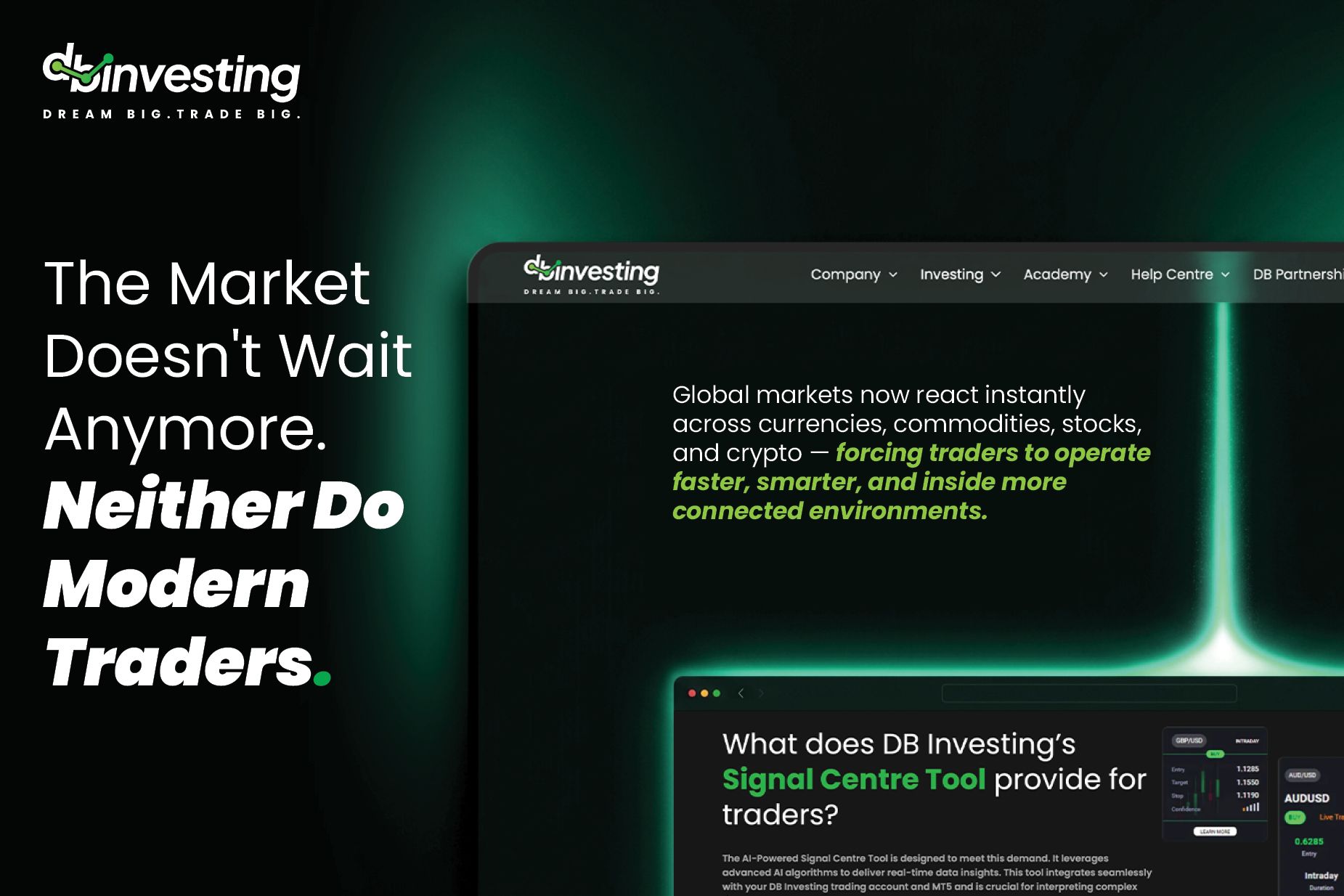
Global markets now react almost instantly across currencies, commodities, stocks, and crypto—pushing
traders to operate faster, think broader, and rely on more connected environments.
There was a time when markets moved in relatively isolated cycles. Currency traders focused on forex.
Equity investors watched stocks. Commodity traders followed oil and gold. Crypto operates largely in its
own ecosystem.
Today, those boundaries are increasingly blurred.
A central bank announcement can move currencies, equities, commodities, and cryptocurrencies within
minutes. A geopolitical headline can trigger volatility across multiple asset classes simultaneously. A
single economic data release can reshape global sentiment before many traders finish reading the report.
The market doesn’t wait anymore. And neither do modern traders.
The Age of Connected Markets
Global financial markets have become deeply interconnected.
When inflation expectations shift in the United States, traders may see reactions in:
- The US Dollar
- Gold prices
- Equity indices
- Treasury yields
- Cryptocurrency markets
All at once.
What was once considered a local event can now become a global catalyst within seconds. For traders,
this creates both opportunity and complexity.
Understanding one market is no longer enough. Understanding how markets influence each other has
become a critical part of modern trading.
Speed Is No Longer a Luxury
In today’s environment, information travels in real time.
Market-moving headlines appear instantly. Economic releases are distributed globally within seconds.
Institutional participants respond almost immediately.
As a result, speed has become an essential component of the trading process.
And it is not just about execution speed. It also means:
- Faster access to market information
- Faster analysis of price action and news
- Faster decision-making workflows
- Faster, more reliable trade execution
Modern traders are increasingly seeking environments that reduce friction between identifying an
opportunity and acting on it—because delays can quickly turn into missed trades.
Why Connected Trading Environments Matter
Many traders still work across multiple disconnected tools.
One platform for charts.
Another for news.
Another for analysis.
Another for execution.
While this approach may have been manageable in slower markets, today’s conditions reward efficiency
and integration.
Connected trading environments help traders:
- Monitor multiple asset classes from a single interface
- Access market data and news in one place
- Respond to events more efficiently
- Maintain clearer visibility across positions and opportunities
The goal is not necessarily to trade more.
The goal is to make better-informed decisions with fewer obstacles in the way.
The Rise of AI‑Assisted Trading Analysis
Artificial intelligence is becoming an increasingly important part of the trading ecosystem—not because
it replaces traders, but because it helps them process information more effectively.
Markets generate vast amounts of data every day.
AI-assisted analysis can help identify:
- Emerging market themes
- Technical developments and patterns
- Potential trading scenarios
- Shifts in sentiment and momentum
The final decision remains with the trader, but the ability to review information faster and in a more
structured way can significantly improve preparation and market awareness. In competitive markets,
information efficiency matters.
Multi‑Asset Access Is Becoming Essential
Modern opportunities rarely exist in isolation.
A trader focused on a single asset class may miss critical signals forming elsewhere. For example:
- A stronger US Dollar can pressure gold prices.
- Rising oil prices can influence energy stocks and related currencies.
- Equity market sentiment can spill over into cryptocurrency flows.
This is why multi-asset trading has become increasingly valuable.
Access to forex, stocks, indices, commodities, ETFs, bonds, and crypto CFDs within a single environment
allows traders to view a broader picture of market activity. And often, a broader perspective leads to more
confident decision-making.
The New Standard for Traders
Successful traders have always focused on strategy. That will not change.
What is changing is the infrastructure that supports those strategies.
Modern traders increasingly expect:
- Real-time market access
- Faster, more reliable execution
- Connected, intuitive trading environments
- AI-supported market analysis
- Multi-asset opportunities in one place
- Seamless, user-friendly experiences
The trading industry is moving from standalone platforms to integrated ecosystems. Traders who adapt
to that shift are often better positioned to act when opportunities emerge—and to manage risk with
greater clarity.
Final Thoughts
Markets are moving faster than ever. Information now travels globally in seconds. Asset classes influence
one another continuously. Opportunities appear and disappear quickly.
In this environment, strategy remains essential—but strategy alone is no longer enough.
The modern trader operates inside a connected ecosystem where speed, technology, market access, and
insight work together. Because the market does not wait anymore—and neither do the traders who want
to stay ahead of it.
Trade Global Markets with DB Investing
Access 20,000+ instruments across forex, stocks, indices, commodities, ETFs, bonds, and crypto CFDs
through one connected trading environment powered by advanced technology and AI‑supported